NIE & Red Tape
How to Get Your NIE in Spain (2026 Guide)

In brief
The NIE is the Spanish tax ID for foreigners, required to buy property, open a bank account and pay tax in Spain. You can get one in two ways: through the Spanish consulate in your country, in 4-8 weeks with no travel, or directly in Spain in 2-4 weeks. The administrative fee is about €10; the most common mistakes are the EX-15 form filled in the wrong language and an undocumented reason for the application.
Buying property in Spain, opening a bank account, paying tax: every step runs through the NIE. It’s the first bureaucratic building block and the one people trip over most often, because the requirements are precise and the counters don’t explain mistakes — they just reject the application. This guide covers all of it: what the NIE really is, the two routes to get one, the documents, the real costs and timings, special cases like inheritance and companies, and how to delegate the process if you can’t travel.
What the NIE is and what it’s for
The NIE (Número de Identidad de Extranjero) is the Spanish tax ID for foreigners. It’s a personal, permanent number, assigned once. You need it to:
- buy or sell a property;
- open a Spanish bank account;
- pay tax (Modelo 210, IBI);
- sign anything that matters: utilities, phone contracts, tenancy agreements, employment contracts.
In practice, you can’t carry out any significant financial transaction in Spain without a NIE. You need it before signing the contrato de arras (the reservation deposit), not after: without a NIE you can’t even open the account you’d pay the deposit from.
NIE, TIE and residencia: three different things
Three terms that often get mixed up:
- NIE — the identification number: what a non-resident needs to buy property.
- TIE (Tarjeta de Identidad de Extranjero) — the physical card for people who live in Spain long-term.
- Residencia — resident status, a different thing again.
To buy property as a non-resident you only need the NIE. Don’t confuse it with residency: they’re separate processes.
The two routes to get a NIE
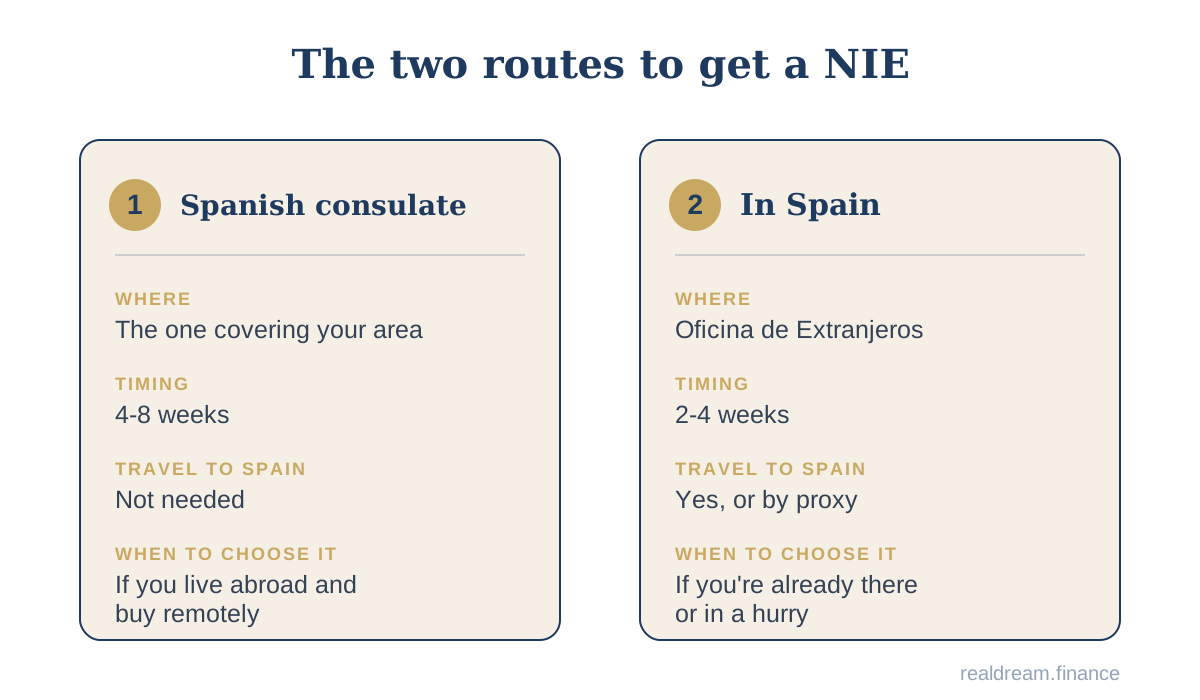
There are two official channels, with different logistics and timings. Which one suits you depends on where you are and how close your completion date is.
Option 1 — The Spanish consulate in your country
The Spanish consulate that covers your area issues the NIE without you having to travel to Spain. It’s the more convenient route if you live abroad and are buying remotely.
- Timing: 2-4 weeks to get an appointment, plus 2-4 weeks of processing. A realistic total of 4-8 weeks.
- Advantage: no travel, handled entirely from home.
- Limit: consular appointment slots fill up fast, especially in spring and summer.
Option 2 — Directly in Spain
You can apply for the NIE at an Oficina de Extranjeros or a Comisaría in Spain.
- Timing: 2-4 weeks, often faster in less busy regions.
- Advantage: quicker.
- Limit: it requires you to be there in person, or a power of attorney for a representative (more on this below).
Which one suits you
- You live abroad and are buying remotely → the consulate route. It’s the default choice.
- You’re already in Spain or you’re on a tight deadline (arras signed, completion coming up) → go directly in Spain, if needed with a power of attorney so you don’t have to travel.
The documents you need
The NIE application requires precise paperwork. One missing or badly formatted document sends you back to square one.
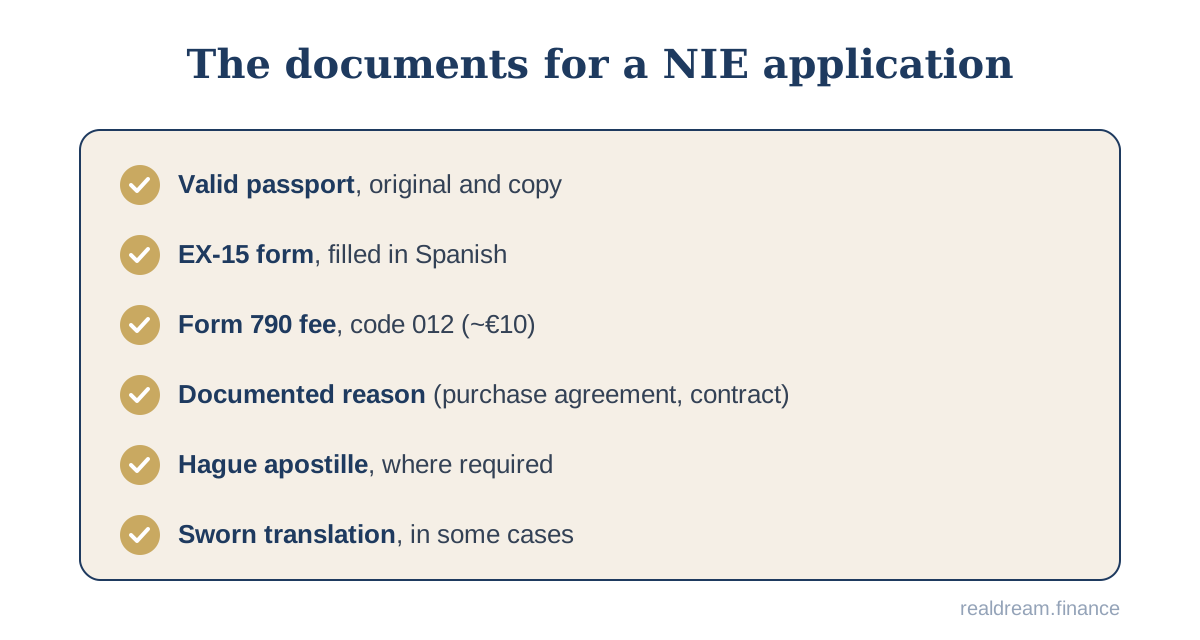
In detail, you need:
- a valid passport, original plus a copy;
- the EX-15 form, filled in Spanish;
- the form 790 fee, code 012 paid (around €10);
- a documented reason for the request: a property purchase agreement, an employment contract or investment paperwork;
- an apostille on public documents, where required;
- in some cases, a sworn translation of the supporting document.
Apostille and sworn translation: how they work
The apostille and the sworn translation exist to make your home-country documents valid before the Spanish authorities, and they typically apply to public documents attached to the application: a power of attorney, civil status certificates, or company paperwork for purchases through an SL. The apostille is the certification set out by the 1961 Hague Convention: it’s issued by the relevant authority in your own country — in Italy, for instance, by the Procura (for notarial and judicial documents) or the Prefettura (for administrative ones). It shouldn’t be confused with legalisation, the longer consular process needed only for countries that haven’t signed the Convention: if your country has, an apostille is enough. The translation, when required, has to come from a traductor jurado recognised in Spain — accredited by the Ministerio de Asuntos Exteriores, which publishes the official list — or be certified in a form the office accepts: it’s worth checking with the consulate or the relevant office before you pay for one. The passport itself, as a rule, needs neither.
How to fill in the EX-15 form
The EX-15 is the formal application for a NIE. Three critical points:
- It has to be filled in Spanish, not your own language: this is the most common mistake.
- Your personal details must match your passport exactly (names, dates, numbers).
- The reason field has to be specific (for example motivos económicos for a property purchase) and backed by the attached documents. A generic reason gets rejected.
What it really costs
The administrative fee is about €10 (form 790, code 012). The real cost, though, is time. People who handle it alone face appointments weeks apart and the risk of rejection over formal details. If you choose the Spain route and decide to go in person, a trip made just for the NIE easily costs €800-1,500 between the flight, hotel and lost working days — and there’s no guarantee one trip is enough.
How long it takes, by season
Timings aren’t fixed. In spring and summer, which coincide with the busiest season for property purchases, consular queues get longer and appointments become scarce. Autumn and winter run more smoothly. The practical rule: start at least 8-10 weeks before you sign the arras, to leave room for anything that goes wrong.
A realistic timeline (consulate route)
Here’s how the weeks usually break down if you choose the consulate in your country:
- Week 1 — gather your documents, fill in the EX-15 in Spanish, arrange the apostille and translations if needed.
- Weeks 1-2 — book the consular appointment and pay the fee (form 790, code 012).
- Weeks 3-5 — the appointment takes place, depending on the office’s availability.
- Weeks 5-8 — processing and issuance of the NIE.
- Right after — open your Spanish bank account, so you’re ready to pay the deposit.
In peak season (spring-summer), add one or two extra weeks just to get the appointment.
The 5 most common mistakes
These are the reasons NIE applications get rejected:
- EX-15 form filled in the wrong language instead of Spanish.
- A generic reason not backed by documents (purchase agreement, contract).
- Fee paid on the wrong form or code.
- Missing apostille on your home-country documents.
- Appointment booked at the wrong consulate for your area of residence.
None of these mistakes gets explained at the counter: the application is simply rejected and you start over, losing the weeks you’d already waited.
Special cases: inheritance, companies, gifts
The standard procedure changes in a few situations:
- Purchase through a company (SL): you need both the company’s NIF and the NIE of the person signing on its behalf. Company paperwork has to be produced and, if it’s foreign, apostilled.
- Inheriting a property: heirs need a NIE to accept the inheritance and register the property in their name. Without a NIE the Spanish succession can’t be completed.
- Gifts: the same principle as inheritance.
These cases need extra documentation and take longer: plan for them in advance.
How to delegate the process (power of attorney)
If you can’t be there in person, you can grant a power of attorney (poder notarial) to a representative who files the application on your behalf. It’s signed in front of a notary — in your country, with an apostille, or at the Spanish consulate — and it sets out exactly what the representative is authorised to do. This is how you get the NIE through the Spain route without travelling: the representative goes to the counter for you.
Has your certificate expired? How to renew it
The NIE number is permanent and never expires. The paper certificate, though, can carry a limited formal validity. If it has expired by the time you complete on the property, you don’t need a new number — you just need a new certificate for the same NIE. It’s a quicker process than the first assignment, but it’s worth planning for if your NIE is a few years old.
NIE and bank account: the right order
The NIE comes before the bank account. Spanish banks won’t open an account for a non-resident without an active NIE, and without an account you can’t pay the deposit or receive the mortgage funds. Getting the order wrong stalls the whole purchase for weeks. This is why it makes sense to treat the NIE and the account as a single, sequential process.
After the NIE: the next steps
Once you have the NIE, the typical path continues like this: you open the Spanish bank account, complete the purchase (with a mortgage or in cash), and once you own the property, you put the Modelo 210 on your calendar — the annual tax return every non-resident owner has to file, even if the property sits empty. Planning these steps together from the start saves you chasing deadlines one at a time.
If you plan to rent out the property, the NIE matters even more: you need it to declare rental income through the Modelo 210 and, in tourist areas, it’s a prerequisite for registering the tourist rental licence in your name. Here too, having the NIE and bank account ready from day one keeps you from getting stuck at the first tax obligation.
Sources
Frequently asked questions
Can I get the NIE without ever coming to Spain?
Yes, through the Spanish consulate that covers your area, wherever you live. It typically takes 4-8 weeks and is the option most non-residents use when buying property in Spain without relocating.
How much does the NIE cost in total?
The official administrative fee (form 790, code 012) is around €10. On top of that you may have the cost of an apostille and a sworn translation, and — if you delegate the process — the service fee. Doing it yourself, the real cost also includes travel if you choose the Spain route in person: often €800-1,500 between flights, hotel and lost working days.
Does the NIE expire?
The NIE number itself is permanent. The physical certificate, however, has a formal validity period (from 3 months to a few years depending on the type): if it has expired by the time you complete on the property, you need a new certificate, not a new number.
Can I delegate the process if I can't go in person?
Yes. You can grant a power of attorney (poder notarial) to a representative who files the application for you, signed in front of a notary in your country (with an apostille) or at the consulate. This is how you get the NIE through the Spain route without travelling.
Do I need a NIE for an inheritance or to buy through a company?
Yes. Heirs to a property in Spain need a NIE to accept the inheritance and register the property in their name. For purchases through a company, you need both the company's NIF and the NIE of the person signing on its behalf. These cases require extra documentation and take longer.
Can I open a Spanish bank account without a NIE?
Practically impossible for a non-resident. Every serious bank requires an active NIE. This is why it makes sense to treat the NIE and the bank account as a single, sequential process.
Roberta
Credit intermediary registered with the Banco de España (ICI)
Want us to take care of it?
We handle it remotely, through the Spanish consulate in your country or directly in Spain, with an English-speaking advisor. NIE on its own or bundled with the bank account — full pricing is on the service page.